 Christian Foundation
Article
Netflix's "Narnia: The Magician's Nephew"
By Christian Foundation · October 2, 2026
"Safe? Who said anything about safe? 'Course he isn't safe. But he's good. He's the King, I tell you."
Aslan Is Not a Costume
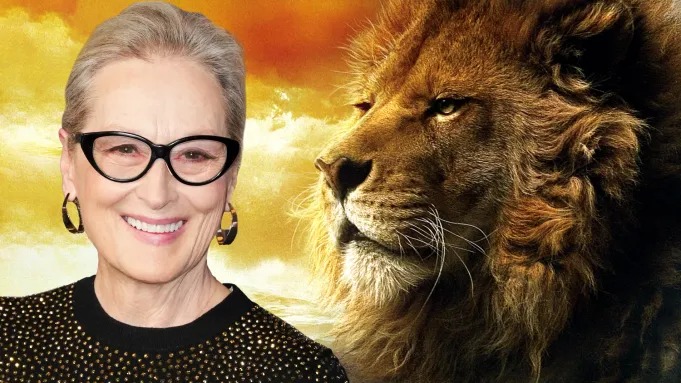
Netflix's Narnia: The Magician's Nephew, written and directed by Greta Gerwig, arrives in theaters in 2027 before it streams. In September, Empire confirmed what had been rumored for a year: Meryl Streep will be the voice of Aslan.
Streep is one of the finest actors alive. That is not the issue. The issue is what Aslan is, who decided that, and whether the people adapting his story believe they have the right to decide otherwise.
Lewis told us exactly who Aslan is
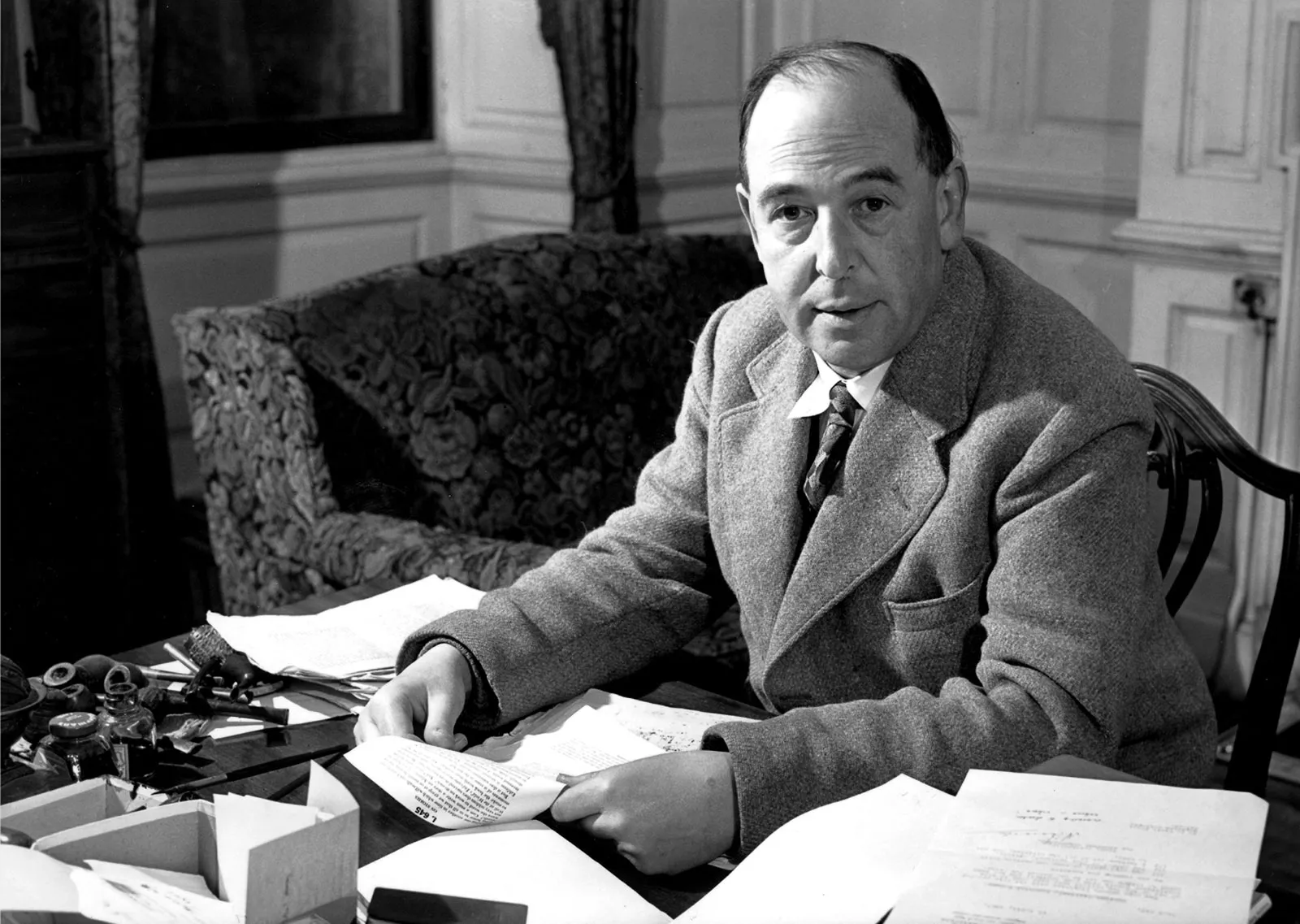
It is common to call Narnia an allegory. Lewis rejected the word. Writing to a group of schoolchildren in 1954, and again to a young reader in 1961, he explained that Aslan is not a symbol standing in for Christ. Aslan is Christ, under a supposition:
"Let us suppose that there were a land like Narnia and that the Son of God, as He became a Man in our world, became a Lion there, and then imagine what would happen."
That is the author's own account of his own character. Aslan is the Son of the Emperor-beyond-the-Sea. He creates Narnia by singing it into being. He dies in a traitor's place on the Stone Table and rises before dawn. He is not a lion who reminds us of Jesus. He is Jesus, as Lewis supposed Jesus would appear in another world.
So the question of Aslan's voice is not a casting question. It is a question about how Christ is portrayed.
God is not male. He is Father.
Christians should be precise here, because the objection is often caricatured.
Scripture is clear that
God is spirit (John 4:24). He is not a man (Numbers 23:19).
He has no body and therefore no sex. Maleness is a creaturely category, and God is not a creature. Anyone who says "God is a man" has misread the Bible.
But God has revealed himself. He has chosen the names by which he will be known, and those names are Father, Son, and Holy Spirit. Jesus taught us to pray "Our Father." He called himself the Son. He promised the Spirit. This is not Bronze Age patriarchy leaking into the text. It is God's self-disclosure, and it is the only access we have to who he is. We do not get to rename him.
Lewis himself made this argument in 1948, in an essay on whether the Church should ordain women as priests. His point was not about women's abilities, which he held in high regard. It was about the images God has given us:
"We have no authority to take the living and semitive figures which God has painted on the canvas of our nature and shift them about as if they were mere geometrical figures."
God chose the images. They carry meaning. They are not interchangeable.
Why the Son came as a man
The Incarnation was not generic. Jesus came as a Jewish man, in a particular body, at a particular time, and the maleness was not incidental.
Paul calls Christ the second Adam (Romans 5:12–19; 1 Corinthians 15:45–49). The first man was given a garden and a command and failed. The second Man was given a wilderness and a cross and did not. Where Adam grasped, Christ obeyed. Where Adam hid, Christ was lifted up. The symmetry is the point. The one who undoes the first man's failure comes as a man.
And the Church is his bride (Ephesians 5:25–32; Revelation 19:7). Christ the bridegroom gives himself up for her. That image runs from the prophets through the Gospels to the last chapter of the Bible. Change the sex of the bridegroom and you have not updated the metaphor. You have dissolved it.
None of this makes women lesser. Eve is made from Adam's side, not his foot. Mary carries God in her womb. Women are the first witnesses of the resurrection. The point is not hierarchy. The point is that God has revealed himself in specific terms, and reverence means receiving them rather than editing them.
"It's just entertainment"
Here is where believers and the entertainment industry talk past each other.
To a studio, Narnia is intellectual property. A reinterpretation is a creative choice, and if a bold choice generates conversation, so much the better. To a Christian, Aslan is not a brand. Children have met Christ through him. Adults have wept at the Stone Table because they knew whose death they were watching. When Lucy buries her face in his mane, she is doing what we do in prayer.
So when the industry treats the identity of Christ as a dial to be adjusted for a fresh take, it is not being edgy about a fictional lion. It is being casual about a Person whom millions of people love and worship. Gerwig has said she has always had "some religious story threaded underneath" her films, and she has been reported as saying that the idea of God the Father feels "alienating" to her. She is entitled to that. But a director who finds God the Father alienating has been handed the one children's story in the English language whose entire purpose is to make God the Father's Son beloved. The mismatch is the problem.
And this is a pattern, not an incident. The last fifteen years have produced a steady run of adaptations in which the Christian content of a Christian author's work is treated as a flaw to be corrected: softened, inverted, or quietly removed. Each one is defended as an artistic choice. Taken together they communicate something else: that Christianity is the one tradition whose sacred things can be reshaped without consequence, because its adherents are expected to absorb it quietly.
What we are asking for
Christians have spent too much energy performing anger at Hollywood and too little making things worth watching.
We are asking for the same thing any community asks when its sacred stories are adapted: fidelity to what the author meant, and respect for the people who hold the story sacred. Lewis told us what Aslan is. He did not leave it ambiguous. An adaptation that keeps the lion and changes the Lord has kept the costume and lost the character.
Streep's casting may yet land differently than feared. First-look materials still refer to Aslan as "he," and no one has seen the film. We will hold our breath and reserve watching it to reviews. We do not owe watching the film to anyone.
"Safe? Who said anything about safe? 'Course he isn't safe. But he's good. He's the King, I tell you."