 Christian Foundation
Article
Who is Jesus?
By Christian Foundation · September 29, 2026
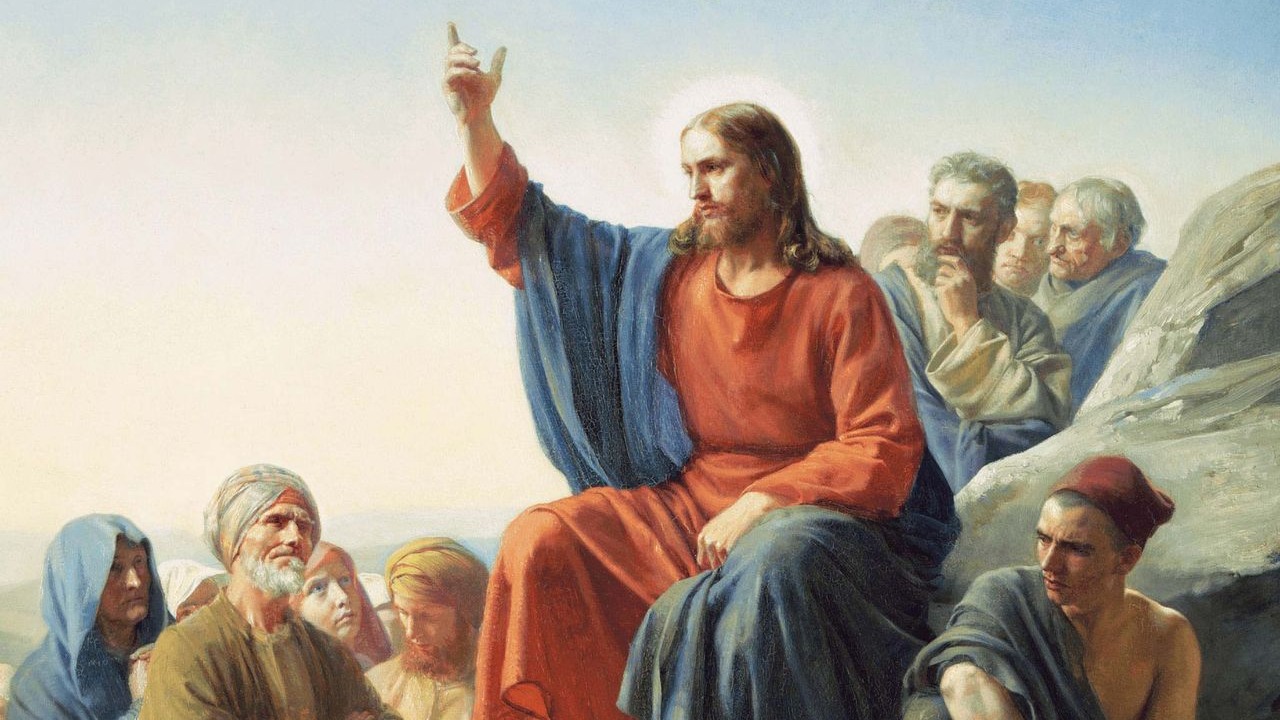
The historical Jesus is not a blank onto which we project a teacher, a revolutionary, or a mystic.
Who Is Jesus?
Every other question in the Christian faith stands or falls on this one. If Jesus of Nazareth never lived, the faith is a story. If he lived but was only a teacher, the faith is a philosophy. If he is who the apostles said he is, then nothing in your life is untouched by him. So we start here, and we start with evidence.
1. Did Jesus exist?
Almost no professional historian, Christian or not, doubts that Jesus of Nazareth lived, taught in Galilee and Judea, and was crucified under Pontius Pilate around AD 30–33. That is not a claim of faith. It rests on sources that had no interest in helping Christians.
Tacitus (c. AD 116), the Roman senator and historian, describing Nero's persecution after the fire of Rome, wrote that the Christians took their name from
"Christus, who suffered the extreme penalty during the reign of Tiberius at the hands of one of our procurators, Pontius Pilatus" (Annals 15.44).
Tacitus despised Christianity; he called it a "pernicious superstition." He had no motive to invent its founder.
Josephus (c. AD 93), a Jewish historian writing for a Roman audience, records the execution of
"James, the brother of Jesus who was called Christ" (Antiquities 20.9.1).
An earlier passage (Antiquities 18.3.3) describes Jesus as a wise man who was crucified under Pilate and whose followers continued after his death. That second passage was later touched up by a Christian copyist, but scholars across the spectrum agree the core is Josephus's own.
Pliny the Younger (c. AD 112), a Roman governor, wrote to the emperor Trajan asking how to handle Christians. He reports that:
They met before dawn and sang hymns "to Christ as to a god" (Letters 10.96).
Within eighty years of the crucifixion, a Roman official confirms that Christians were worshipping Jesus.
Lucian of Samosata (2nd century), a satirist who mocked Christians, refers to
"the man who was crucified in Palestine because he introduced this new cult into the world" (The Passing of Peregrinus 11).
The Babylonian Talmud (Sanhedrin 43a), a hostile Jewish source, records that "Yeshu" was hanged on the eve of Passover. The account is late and polemical, but it does not deny that he existed or that he was executed; it disputes why.
Add Suetonius, Mara bar Serapion, and Thallus (each fragmentary or debated), and you have Roman, Jewish, and pagan writers, none of them believers, agreeing on the outline: a Jewish teacher named Jesus, called Christ by his followers, was crucified under Pilate, and his followers worshipped him afterward. Skeptics who deny his existence are arguing against the historians, not with them.
2. Can we trust the documents?
The New Testament is the best-attested text from the ancient world. That is a measurable claim.
We possess roughly 5,800 Greek manuscripts of the New Testament, in whole or in part, plus around 10,000 in Latin and thousands more in Syriac, Coptic, Armenian, and other languages. By comparison, Homer's Iliad, the second-best-attested ancient work, survives in around 1,900 manuscripts. Tacitus's Annals survives in a handful. Caesar's Gallic Wars in a few dozen.
The gap between writing and earliest surviving copy is also unusually short. P52, a fragment of John 18 held at the John Rylands Library in Manchester, is generally dated to the second century, within living memory of the Gospel's composition. Substantial papyri like P66 and P75 (John and Luke) date to the late second or early third century. Complete New Testaments, Codex Sinaiticus and Codex Vaticanus, survive from the fourth century. For most classical authors, the gap is 500 to 1,000 years.
What about the variants? There are many, because there are many manuscripts. The vast majority are spelling differences, word order, and obvious slips of the pen. No article of the Christian faith rests on a disputed reading. The text you hold is, to a very high degree of confidence, what the apostles wrote.
The Gospels themselves were written within the first generation. Mark by the 60s, Matthew and Luke by the 70s to 80s, John by the 90s, all while eyewitnesses were alive to object. And earlier still, Paul quotes a creed he "received" and "delivered" to the Corinthians: that Christ died for our sins, was buried, was raised on the third day, and appeared to Peter, the Twelve, five hundred at once, James, and the apostles (1 Corinthians 15:3–7). Paul wrote that letter around AD 55, and he received the creed years before. Even skeptical scholars date this confession to within a few years of the crucifixion. The resurrection was not a legend that grew. It was the first thing Christians said.
3. Who did Jesus say he was?
Here is where the evidence turns from history to confrontation. Jesus did not present himself as one more rabbi.
He forgave sins. When a paralyzed man was lowered through a roof, Jesus said, "Son, your sins are forgiven." The scribes understood exactly what that meant: "Who can forgive sins but God alone?" (Mark 2:5–7). He did not correct them. He healed the man to prove the point.
He claimed the divine name. Arguing with the religious leaders, he said,
"Before Abraham was, I am" (John 8:58),
Taking up the name God gave Moses at the burning bush (Exodus 3:14). They picked up stones. Later he said,
"I and the Father are one," and they reached for stones again, "because you, being a man, make yourself God" (John 10:30–33).
His enemies understood his claim better than many modern readers do.
He accepted the charge that condemned him. At his trial the high priest asked,
"Are you the Christ, the Son of the Blessed?" Jesus answered, "I am, and you will see the Son of Man seated at the right hand of Power, and coming with the clouds of heaven" (Mark 14:61–62),
a direct citation of Daniel 7:13–14, where one "like a son of man" receives everlasting dominion and the worship of all nations. The high priest tore his robes and called it blasphemy. Jesus was not executed for being kind. He was executed for who he claimed to be.
He received worship. Angels in Scripture refuse worship (Revelation 19:10). Jesus never did. The disciples worshipped him in the boat (Matthew 14:33), the women at the tomb (Matthew 28:9), the healed blind man (John 9:38). When Thomas fell before him and said,
"My Lord and my God," Jesus blessed him for believing (John 20:28–29).
4. What did the apostles say he was?
The men who knew him best said it plainly.
John: "In the beginning was the Word, and the Word was with God, and the Word was God... And the Word became flesh and dwelt among us" (John 1:1, 14).
Paul: "He is the image of the invisible God, the firstborn of all creation. For by him all things were created... and in him all things hold together" (Colossians 1:15–17). "In him the whole fullness of deity dwells bodily" (Colossians 2:9). He calls Jesus "our great God and Savior" (Titus 2:13) and writes that "at the name of Jesus every knee should bow," quoting Isaiah 45:23, a verse about Yahweh alone (Philippians 2:10–11).
The writer of Hebrews: the Son is "the radiance of the glory of God and the exact imprint of his nature," and God says to him, "Your throne, O God, is forever and ever" (Hebrews 1:3, 8).
Peter: "our God and Savior Jesus Christ" (2 Peter 1:1).
These were monotheistic Jews. Every instinct they had forbade calling a man God. They did it anyway, because they had seen him die and then eaten breakfast with him.
5. Did the early church invent this later?
No. The claim that Jesus's divinity was voted in at Nicaea in AD 325 does not survive contact with the sources.
Pliny, a pagan, reports Christians singing to Christ "as to a god" around AD 112. Ignatius of Antioch, martyred around AD 110, writes of "our God, Jesus Christ" (Letter to the Ephesians 18.2). Justin Martyr (c. AD 150) defends the worship of Christ as God to the Roman emperor. The Council of Nicaea did not invent the doctrine. It defended what the church had confessed from the beginning against a new teaching that denied it.
6. So who is he?
The historical Jesus is not a blank onto which we project a teacher, a revolutionary, or a mystic. He is a specific man who made a specific claim and was executed for it, whose followers immediately and at great cost worshipped him as God, and whose tomb they insisted was empty.
C. S. Lewis put the options honestly.
A man who said what Jesus said is either a liar, a lunatic, or Lord. What he cannot be is merely a great moral teacher, because great moral teachers do not claim to be the God of Israel.
The church has confessed the answer since the first century and defined it carefully at Nicaea and Chalcedon: Jesus Christ is fully God and fully man, one person in two natures, the eternal Son who took on flesh, died for sins, rose bodily, and reigns. Everything else we will teach here follows from that.
If you are new to the faith, this is the ground under your feet. It is not a feeling. It is a Person, and he is who he said he is.
---
Next in Start Here: What happens to a believer when they are Born Again?
On the map