Turning pointAD 1095–1291
The Crusades
Four centuries after the Islamic conquests took Jerusalem, Antioch, Alexandria and Christian North Africa, the East asked the West for soldiers — and the West went.
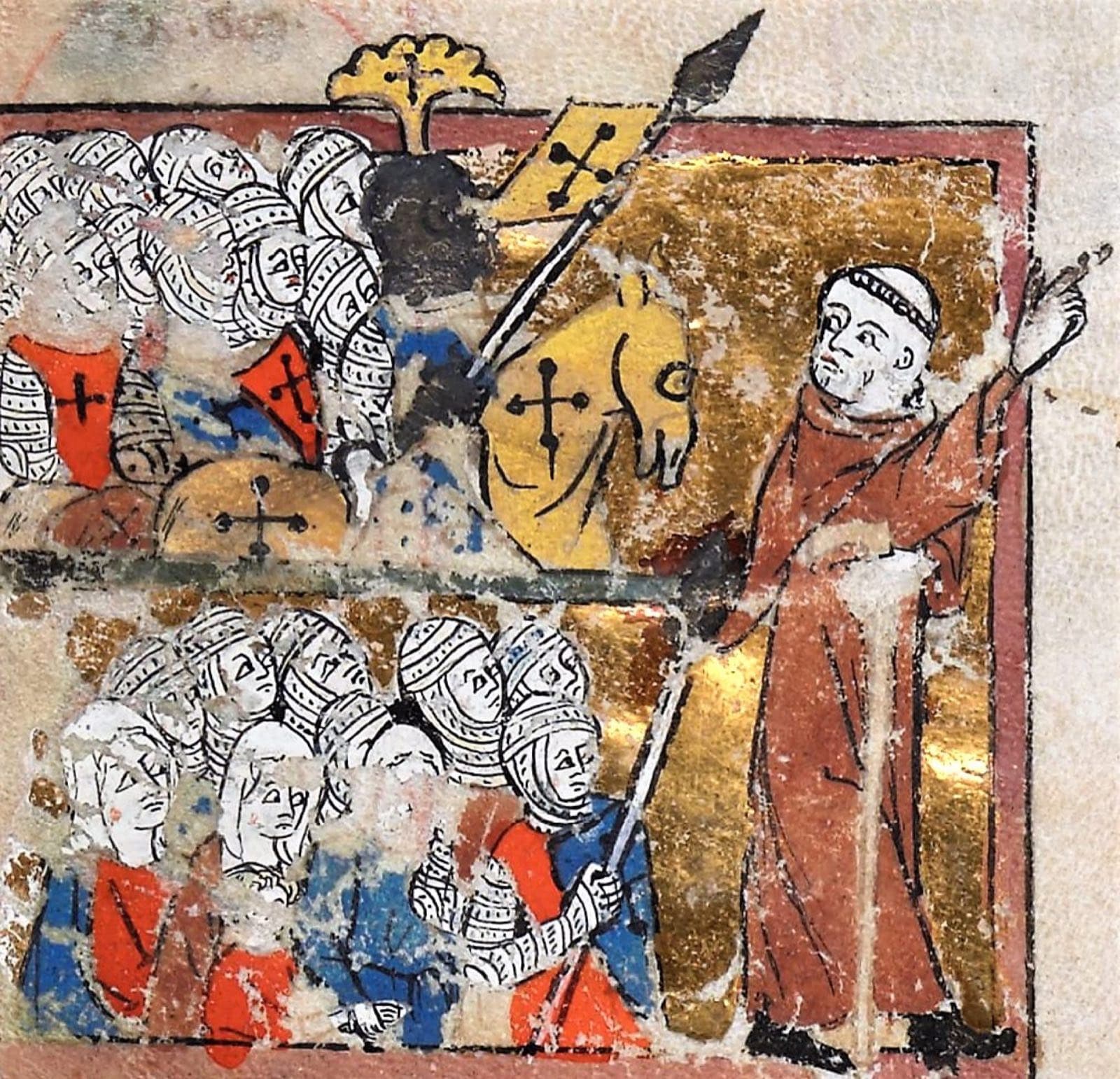
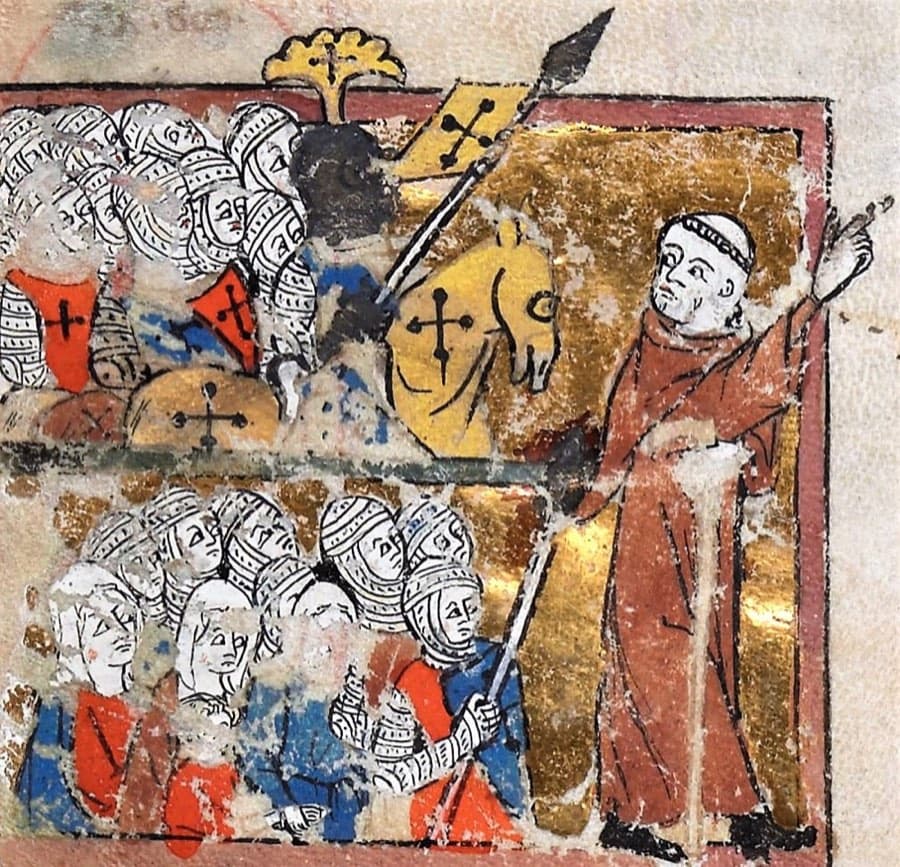
By 1095 more than half of what had been the Christian world had been under Muslim rule for four centuries: Syria and Palestine from the 630s, Egypt and the North Africa of Cyprian and Augustine by 700, Spain from 711, Sicily in the ninth century — and in 846 a raiding fleet sacked St Peter's outside the walls of Rome. In 1071 the Seljuks destroyed the Byzantine army at Manzikert and took most of Asia Minor; in 1095 the emperor Alexios sent west asking for troops. Urban II preached the First Crusade at Clermont that November: go and help the eastern churches, and open the road to Jerusalem again.
That is a war of defence, and defending people under attack is not merely permissible but right — the church had taught as much since Augustine. Nor was it a colonial venture in its origins: what Urban offered those who went was an indulgence, the remission of the penance owed for sin, for a journey made out of devotion and not for gain, and the charters show families mortgaging estates to go and coming home poorer, when they came home.
Good and right things can be abused, and this one was almost at once. Bands under Count Emicho massacred the Jewish communities of the Rhineland in 1096, while the bishops of Speyer, Worms and Mainz tried to shelter them. Jerusalem's inhabitants were slaughtered when the city fell in 1099. And in 1204 a crusade that never reached the Holy Land sacked Christian Constantinople instead — which Innocent III condemned, and the Greek church has not forgotten.
What was at stake
That a just cause does not sanctify whatever is done under it. The defence of Christians under attack was legitimate; the Rhineland in 1096, Jerusalem in 1099 and Constantinople in 1204 were not, and churchmen said so at the time. Both halves of that are true, and an account which reports only one of them is not telling you the truth.
 Christian Foundation